Tuesday 2 February was Imbolc, or St. Brigid’s Day, or Candlemas. Underneath all these names, halfway between the winter solstice and the spring equinox, is the slow return of life.
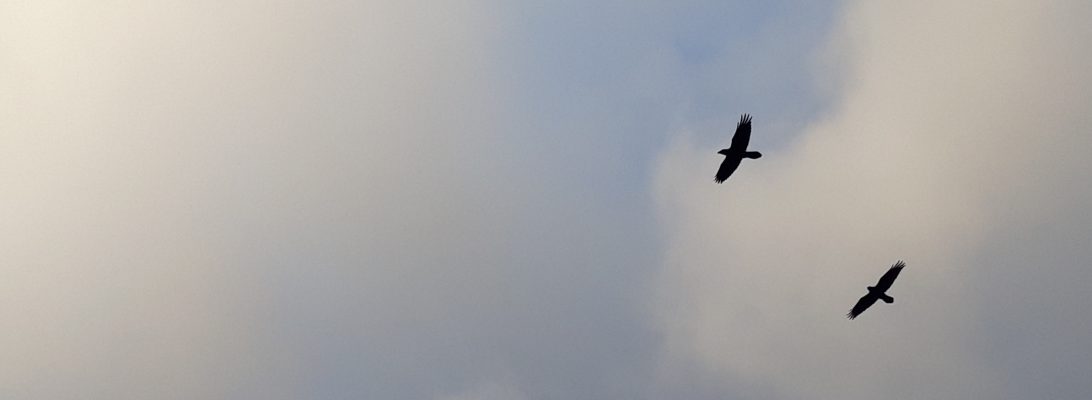
The skies are edging towards lightening earlier and darkening later. Between times they are scored through with the flight of ravens, buoyant on the frigid north wind. Pairs lift and curl in their nuptial flight, the males mirroring the birling females. If they get the steps to the dance right, they have a chance of becoming a mate; the successful twosomes will have eggs in the coming weeks.
Everything below them though is still biding its time; the ground is frozen hard. There is no give at all in earth that normally slides beneath my boots.
I am itching to create new beds this year: pumpkin, kale, and turnip are all neatly laid out in an excel spreadsheet on my computer, hundreds of miniscule seeds wrapped in brown paper in their drawer. Waiting in the darkness for the ground to be released.
I did notice the first garlic shoot the other day, a few millimetres of green spearing the frosted crust of soil below the pallets that lie across the tops of the beds. At first the barrier of wood was there to stop the hens digging up the seedbulbs, and now it stops the sheep from eating those fresh, bold shoots.
Some of the sheep are rotund, expectant with lambs. It is difficult for them to fill their bellies though. They nibble anything and everything they can find, and it still isn’t much. They are not our sheep – there is no cattlegrid now to stop them wandering off their own grazings ground, and they make a mess around our unfenced house – but I don’t chase them at this time of year. I realise in retrospect that by chasing them last year I have done them a favour: I have protected some grass for them to eat now. Elsewhere the moss and lichen growing up the sides of the oak trees have been cleared as far as each sheep’s desperate neck can reach. They even bite the softer rushes down.
That said, these sheep will probably be fine. In Highland Folkways, historian Isabel F Grant records that the hardiness of blackface and cheviot was one reason they prospered in this landscape. They can survive a winter on the hill. Introduced in the eighteenth century, they replaced the more delicate breed – now lost – that Highlanders had kept mainly for milk, before the Clearances changed the habits of lifetimes. Habit is why these sheep are here now. It draws them back to the ground on which they were born to have their own lambs.
We sit on a cusp, midway between the darkest night of winter and the first day of spring, Underneath the frost and snow, the swelling of life is almost imperceptible. But it is there, heralded by the ravens.

First published in Lochaber Times, February 11, 2021
 Kirsteen Bell