Horse chestnut

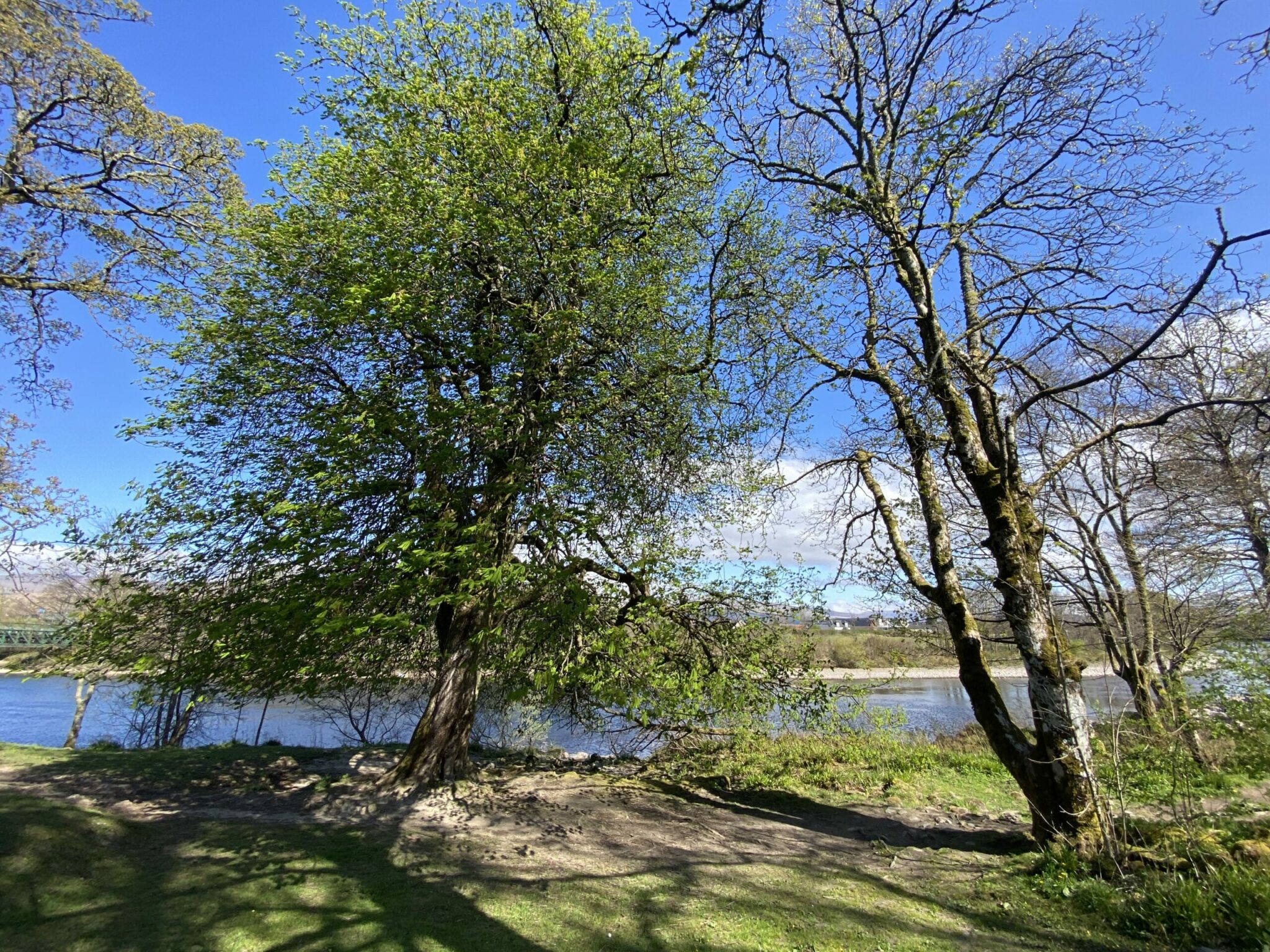
Driving north on the A82 this week, I rounded a bend near Letterfinlay and found myself catapulted into summer. While most of the trees round my home on the south shore of Loch Eil are just tentatively green, two horse chestnuts by the road above Loch Lochy stood resplendent. Hundreds of five-fingered leaves waved at me through the window of my speeding car, broad and open to the sun.
The order in which different tree species put out their leaves comes partly from their inner structure. Softwoods like birch, alder, and cherry can quickly mend any winter damage to the vessels that transport water from root to crown. Hardwoods however have fewer, large-diameter vessels that tear and rupture more easily; they take longer to repair and make ready for the rush of spring sap.

Horse chestnuts are a close-grained hardwood, so at first glance their early exuberance seemed out of place. In fact, it was very much of its own, specific place.

Whether hard or soft, each tree can also make a choice about when to go into leaf based on its immediate environment.

Individual microclimates have different amounts of light, heat, and humidity that tell the tree when it is time to grow. As a result, the oak, willow, birch, hazel, and alder on our north facing shore are slower to emerge than their south-facing cousins. The verdancy of those horse chestnuts on the hill above Loch Lochy suggested they live with an abundance of sunshine.

It was with that in mind I went to visit another horse chestnut much further downstream. This one grows in the shadow of Old Inverlochy Castle, where the River Lochy flows towards Loch Linnhe. I wanted to see if it had unfurled too.

Instead, its leaves were small. They curled in on themselves away from a biting north-west wind. Occasionally, the air would lift them towards a blue sky, their edges vivid in the April sunlight – but I had to admit it was still too early to fully embrace the idea of summer.

In Scottish Place Names (Lomond Books, 2000), George Mackay says Letterfinlay means ‘Hill of the fair soldier’ (Leitir, meaning hillside, fionn meaning fair, and laoich meaning soldier’s). The Letterfinlay horse chestnuts then are the fair soldiers of summer: a vanguard announcing the light and warmth still to reach the rest of us.

First published in Lochaber Times 24th April 2022
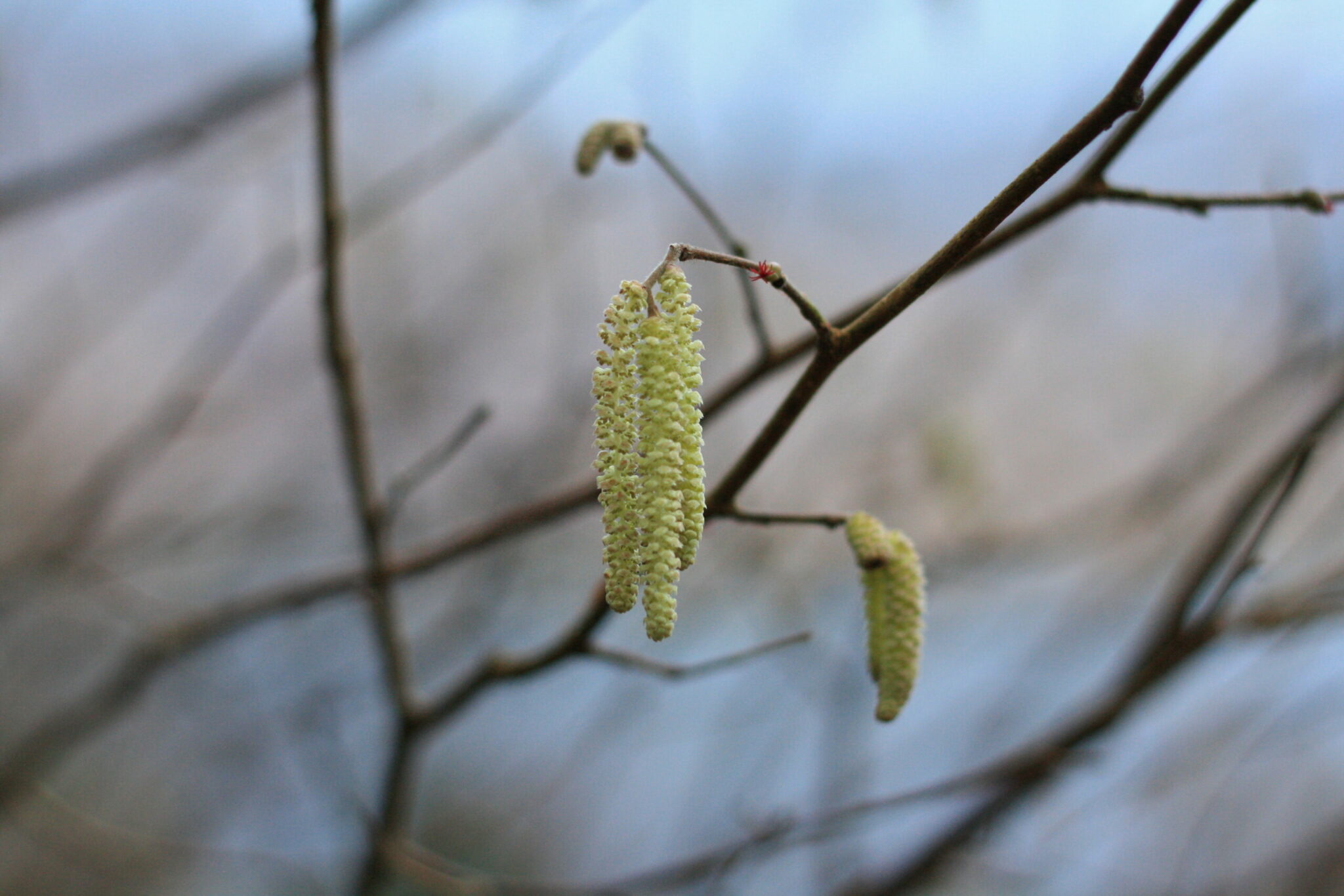
Hazel Catkins

In the gales that have torn through the country over the last couple of months, it is easy to see why trees drop their leaves. They time their growth and fall with the weather. Imagine thousands of tiny green sails catching those winds – there wouldn’t be many woods left standing. But, while most deciduous trees keep themselves battened down until Spring, the hazel is blooming.

Its catkins begin to appear in December and January, decorating woodlands through the late winter. Tiny green-gold flowers, a few millimetres wide and peaked like the beaks of baby birds, dangle in long rows from otherwise bare branches.  As the days slowly lengthen, the catkins ripen into opulent lemony curls. They seem delicate, like a light pale tinsel that could fall easily off their twigs.

While polytunnels are being shredded, paint is stripped off picnic tables, and branches thick and thin are being scattered to the ground, it seems unlikely that anything as slight as a catkin could remain fixed in place. However, their appearance is deceptive; they are built for the wind. Try as it might to pull the soft flowers from the woody stem, the tails simply dance along with the wind, and it cannot get a grip.

While most blossoms rely on insects to carry pollen between them, hazel trees depend on the movement of the air. Each tree has both male and female flowers but cannot pollinate itself. The long concertinas are the male flowers, each giving up puffs of pollen that will gust across to its neighbour. Waiting there, tucked in close to their branch, are the miniscule red fronds of the female flowers. They grow on tiny green buds that, if fertilised, will become hazelnuts.

I like the hazel’s relationship with the winter weather. Instead of hiding from it, or resisting it, they live on it.

In her now-famous book, The Living Mountain, Nan Shepherd observes that the people of the Cairngorms take on characteristics of the landscape in which they live. I wonder about the attitude of people who live in Scotland towards the weather, and how it might echo a little of the hazel’s approach, where the ability to withstand winter storms is a behaviour learned through necessity.

Hazel trees were apparently one of the first species to colonise this landscape after the last ice age, and so humans and hazel have been sharing this particular corner of the world for several thousand years. Its pliable wood would have sheltered us, carried us as boat frames, tipped with flint and thrown for hunting, and, of course, its nuts would have been a welcome and easily stored protein.

Every year I search for the little red flowers with the potential for an autumn harvest; I’ll watch them swell over the summer, waiting for the moment they’re ripe, but – like every year – the deer will probably beat me to it. It’s all in the timing.

First published in Lochaber Times 11th March 2022

First footer

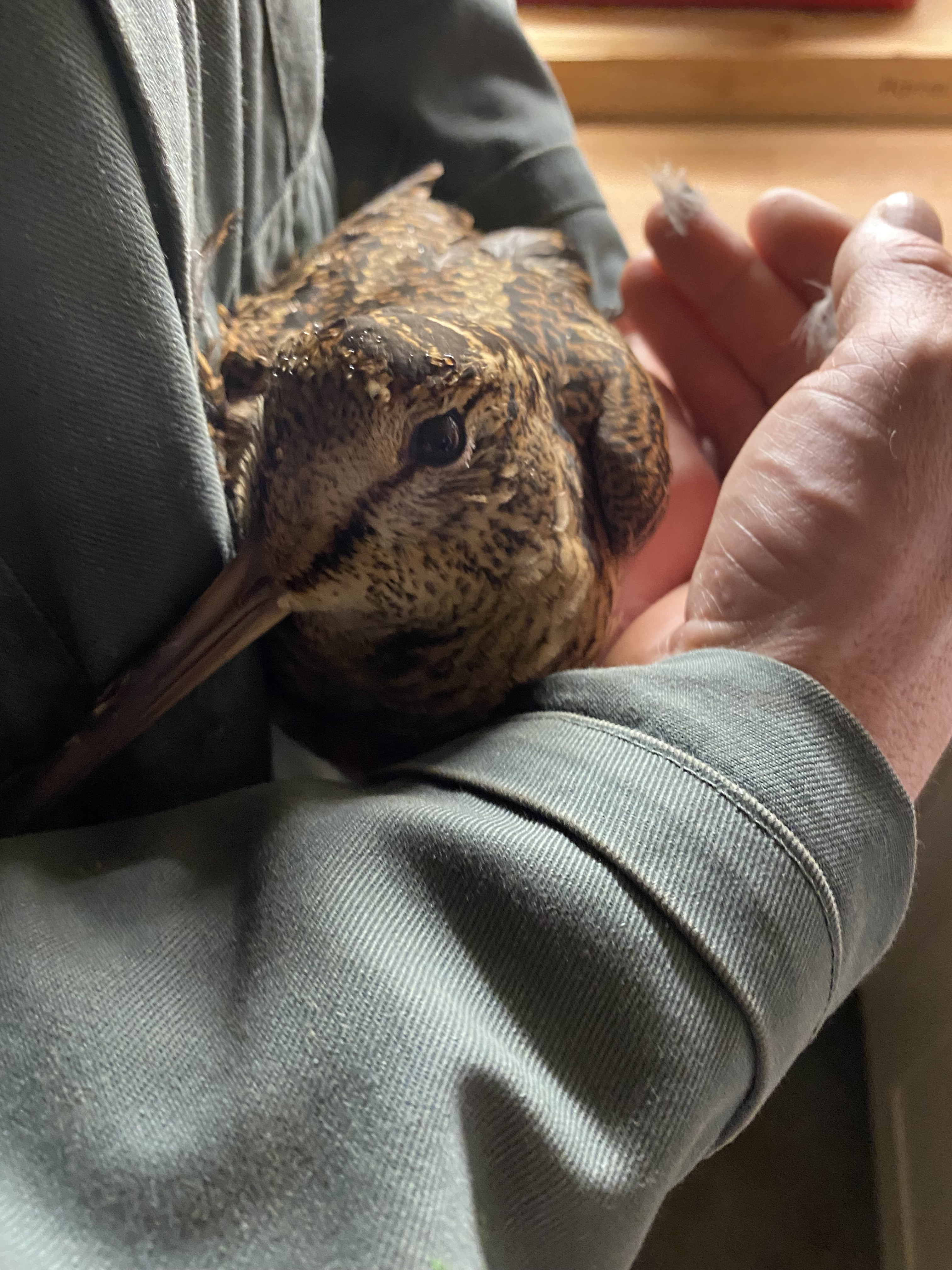
Our first footer this year was a woodcock.

The first day of 2022, and the night before a new moon, my partner had been driving along the single-track road towards home when his headlights fell on a dark eye, ringed in brightness, right in the middle of the van’s path.

Beyond the verges, the ground here proliferates with trees: birch, willow, and hazel fringe wee fields, oaks grow out of old walls, and alder grows out of ditches.

As their name suggests, woodcock prefer deciduous woodland. I can’t tell you how many might live in the woods that straggle along the road between the crofts and the shoreline. I only ever glimpse them at dusk, my car headlights often throwing a brief spill of light onto a cooried creature on the verge, a blink at the dark stripe running from the back of its head to a long, straight beak, before my foot on the pedal sweeps the car on, leaving the bird to, hopefully, return into the safety of night.

This one, though, stood immobile in the glare of the van lights. L. tried to encourage it off the road, but it remained frozen. In the end, he had to pick it up and bring it to the house, cradled in the lap of his boiler suit.

While I googled what to do with our visitor – who we guessed was in shock from a knock from another vehicle – the kids came closer. Our fluorescent kitchen light slid along intricate bands of bronze and brown, giving definition to the downy grey feathers ruffled and visible along one flank. The woodcock’s eyes fixed on them, assessing for threat presumably – though its apparent shock made the look seem steady and sure.

‘A comfortable dark box to rest and recover in’ was the advice given, where it would either die from its injuries or revive sufficiently to be returned outside.

So, in hope, I grabbed a box and ran out to tear wet grass and moss from the bank. I was on my way back in when the bird decided it had had enough: it whirred up and out of L.’s arms, leaving a trail of feathers across the table.

We stood, looking at the bird, looking at each other, at a complete loss. There was a woodcock under our table.

I followed it slowly, shushing as I might a child. As we watched the creature dip and weave over the hard laminate flooring, leaving little white squitty splats of poo in its wake, I questioned, who was first-footing who? Who took the first step into whose home? Who belongs here more?

We opened the back door, which leads onto our unfenced garden, bordered only by rushes, brambles, and woodland, and watched it walk into the night.

First published in Lochaber Times 13 January 2022

Gathering Acorns

When the skies are clear now, their blue is edged with ice, and the hills have gathered their first snow. Finally, the acorns are turning from bright green to warm brown. I’ve been stalking the fallen fruit from the oak, raking my fingers through wet leaves to gather little harvests that are lunch for our pigs.

Each find is immensely satisfying, even more so when I reach for one and discover ten more rolled into a hollow. My eyes snag on the gleam of an acorns’ soft white end, like the rear-end of a roe glimpsed through autumn bracken, or the tail-feathers of a jay as it scoots between the trees.

The jays come for the same harvest. Sometimes their flight is preceded by a shriek, but more often they are quiet as they go about their business. If the sun is out though, it catches their snowy undersides, or a bobbing branch might give away their landing spot, revealing a rose-brown breast and mantle, a bright blue edge.

The clusters of acorns I uncover – tucked beneath tussocks of grass, nestled in the moss of the stone wall, or simply concealed by leaves – are potentially jay caches. Hidden locations are stowed in their memories for months – stowed so well that they can dig through thick layers of snow to retrieve them.

From the house, I watch three jays dropping out of the oak to the ground of the old pigpen, nosing through the fallen leaves. One bird flurries up to sit briefly on the fence, white gullet bulging with its haul. It scans the surroundings before flying into the birchwood, gullet empty on return.

As a well-fed jay will often leave a hoard untouched, it can be the trees who benefit. A new generation of oaks might be given a head-start by an abandoned store. Left to grow, some of these green shoots will become a spring meal for a gestating roe deer. I wonder briefly who or what I might deprive by gathering bucketfuls of these acorns. I console myself that this is just one of many fruiting oaks, on just one of the many tree-lined crofts that the jays and deer will frequent.

The pigs and I will collect a fraction of the acorns within our boundaries; the jays will not return to all their successful stashes; the nuts still hidden will have their chance.

First published in Lochaber Times October 27, 2021

Wind

Wednesday 22 September was the Autumn equinox, which marks the moment the Northern Hemisphere no longer leans towards the sun. Air temperatures at the pole begin to drop. The resulting difference of temperature between pole and equator creates movement in the air – creates wind. 

With the wind, comes change. Leaves that were quiet under the summer calls of birds and insects have now found their voice. Birch whisper, alder and hazel flitter, and oaks swish. From a sheltered spot you can sometimes hear a gust on its way, the treetops susurrating in a westerly wave. It won’t be long before those leaves start to turn and fall. The trees know these winds are the first of many. If they drop their thousands of tiny sails, they have a better chance of bending through the coming weather. 

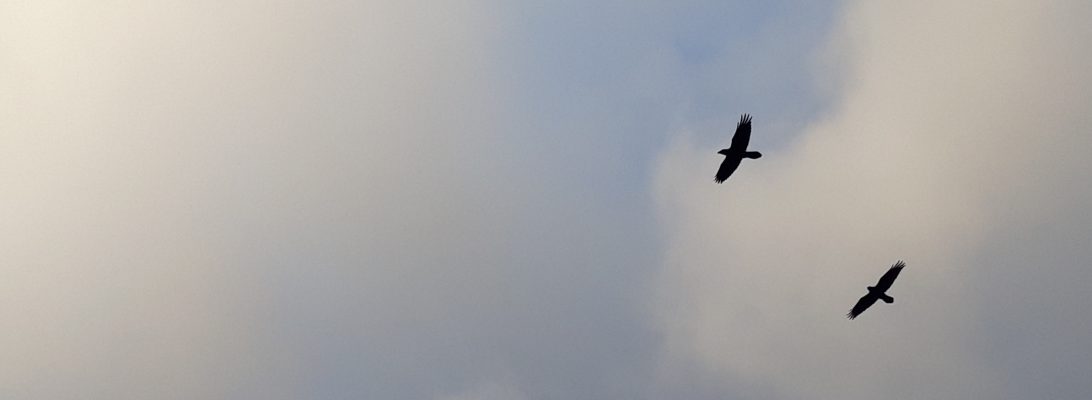
Ravens and buzzards however seem to revel in the wind. Unlike crows, ravens will play in a turbulent sky, groups of them swinging and sliding on the air in what looks an awful lot like joy. 

Buzzards sail easily through the ravens’ antics, sure on their course. One lands often by our house, on the northmost branch of an empty gean tree. Face and feathers into the wind, its wings blow out behind like a superhero’s cape. It seems comfortable with the power of the wind. On still days, buzzards will hunt from posts and treetops, but in autumn and winter they can also be seen hovering up high, wings wide open to the airflow, a steady stream of tiny adjustments shaping bird to sky. Through all this movement, the head can be completely still, hooked on an invisible line of sight to prey far below. 

For the humans in the landscape, wind has long brought problems. Historian James Hunter has written about a particularly fierce gale that came on October 1, 1881, destroying crops and fishing boats and leaving Highlanders facing a particularly bad winter of famine. In the present day, people whose livelihoods depend on the weather still face tense nights, waiting to see what damage a night-time gale has wrought. 

Yet wind also keeps us going. It can be what keeps us cosy in the midst of a storm: wind turbines can provide heat and light all through the winter, such as those at Beinneun Wind Farm. Visible from the A82 at Bridge of Oich, its giant, bird-like turbines perch elegantly on the hills, facing into the wind. 

We sit somewhere between the trees and the buzzard: battening down the hatches where we have to, letting the wind support us where we can.

First published in Lochaber Times, September 30, 2021

Rowan Berries

Rowan: caorann, or fuinnseag-coile in Gaelic, meaning ‘wood enchantress’, I am told. Clusters of its vivid red berries are enchanting the summer woods now with the idea of autumn.

There has been a slight but definite shift in the air, a barely tangible turning of the season underneath the warm sun. A few birch and oak leaves are hinting at yellow. The bright colours of the rowan fruit are the first of many, as the crab apples and brambles also begin to ripen.

It was an August I found out I was expecting my first child; it was a good year for the rowans then too. I remember the branches hanging heavy and low with the weight of them– so much so that I almost called our son Rowan. Though we didn’t in the end, the sight of all those berries, shocking against the green of summer, still reminds me of that time. Sitting as it does on the threshold of the seasons, I like that the rowan marked my threshold into motherhood.

The tree was often planted near the thresholds of homes as protection. Tradition also has it that a rowan should not be felled unless for sacred or ceremonial purposes – or at the very least, you should plant a seed for every tree cut. When our pigs had exhausted the ground they were on, and needed fresh vegetation to eat, I would walk the croft pulling any tiny stray saplings that had drifted from the woodland. But I only ever lifted the birch and oak. As a result, the slopes are scattered still with young rowans that I couldn’t bring myself to pull out.

If I felt industrious, I could utilise this year’s abundance by making rowan jelly, or maybe even wine – another piece of lore is that you will receive the gift of future sight on drinking the distilled spirit. I don’t need to be a seer to tell you that, in all likelihood, these trees will just provide more food for the birds.

The Latin name for the rowan tree is sorbus aucuparia: fruit for catching birds. The winter thrushes will soon come: flocks of redwing and fieldfare travelling through the trees in a chattering cloud of sound. They strip the rowan berries as they go, leaving droppings that sow the seeds of future harvests. At least, I hope they will. The birds were notably absent last year: a late frost had killed the early rowan blooms, so there were no berries at all. Standing watchfully on this year’s threshold, underneath boughfuls of potential, I am hopeful.

First published in Lochaber Times, September 2, 2021

Falling House Martins

Eleven years ago, when we first moved into this house, by July we would be getting woken at 4 each morning by the chattering of dozens of swallows. Their garbled song was like a tape running backwards. We see a few passing now overhead, but none stop for long.

The house martins still visit though, wee black and white birds, distinguished from swallows in flight by their shorter, blunt tails.

The martins usually arrive with the warm air, that also ensures their diet of flying insects have emerged. We did see a few zipping briefly across the sky in May, but it only opened with more wind and rain, and seemed to wash them away again.

Pairs will normally build nests in the east and west gables of our roof. Once cliff dwellers, they have adapted: their name comes from the habit now of nesting on houses. By the middle of June however, thanks to the late arrival of spring and summer, I had given up on even that happening.

A small part of me was relieved they hadn’t used the west gable, as the nests there frequently collapse. These little architects use mud to build. But, under the pressure of the prevailing weather and the weight of almost fledged chicks, the little feather-lined domes often fall to the grass below.

This time last year I had already attempted to rescue the first of two lots of chicks. With most young birds, if they appear unharmed they should be left where they are: the parents will find them. In this situation though, I read that the young house martins need a head of air to be able to take their maiden flight. Their parents are also unlikely to come to the ground to feed. I was given the advice that these black and grey bundles of feathery fluff should be returned to the nest – except in this case their nest was no more.

I tried them at the top of the slide, on windowsills – anything to keep them out of reach of the cat and the pine marten, and to raise them closer to their parents. The chicks would still be there each morning, shivering and silent with what looked like fear, and no sign of attention from the older birds. In the end, I put them in tiny cardboard box along with the fallen nest. Using masking tape, I fixed it to the outside of the upstairs window, as close as I could get it to the original location. This attempt was successful. Rehomed, the mother and father heard their calls, continuing to feed the young birds until they were able to fledge.

At the other end of the house, the nest at the east gable was still whole at the end of last winter. It would only have needed a little fixing up to be ready for a new brood in the summer. All the same, this year it has no occupants.

Instead, one pair has finally made a stand again in the west. Just one unreliable, late nest. There are no chicks to be heard yet, but there is still time for one or two clutches before the martins begin their migration back south. I’ve got my cardboard box and masking tape at the ready.

First published in Lochaber Times, July 21, 2021

Addendum:

Earth Day Cuckoo

22nd April was Earth Day, and it also happened to be the day I heard the first cuckoo of the year.

I saw it before I heard it. A bird with a narrow, barred tail and pointed wings in a straight flight. I took it though for a sparrowhawk as I wasn’t expecting the cuckoo just yet. Maybe it was the late frost, but spring doesn’t quite feel sprung enough for the cuckoo’s call.

It is the male’s call that is most recognisable. While the female is not entirely silent, she has more need to keep a low profile. She has to, if she wants any of her eggs to succeed. The cuckoo’s well-known practice of laying in a surrogate parent’s nest means she can lay as many as 25 eggs in one season.

Cuckoo’s eggs coevolved to match those of their host species. A survey that examined nests between 1939 and 1972 showed that, in the UK at least, the range of targeted birds is wide – from the blackbird to the wren – but it was the dunnock who was singled out most often, followed by warblers, pipits and pied wagtails.

The female cuckoo will watch her chosen nest, waiting for the host parents to leave. When they do she takes 10 seconds to fly in, remove one of the existing eggs, lay her own, and out again. If she has done her job well, the cuckolded pair never suspect. However, if she is spotted, the potential hosts will inspect their eggs and reject any that look remiss.

If the cuckoo egg passes muster, it will hatch half a day before the others in the nest. When it does, this brand new, blind and bald chick will somehow still manage to roll each egg onto its back – and push them out.

The subterfuge skills it inherits from its parents don’t stop there. A young cuckoo’s begging call is equal to that of a group of the smaller birds. So, the parents keep bringing the same amount of food to its one, now giant, chick, as opposed to the four wee mouths it started with.

Despite these incredible practices, cuckoos have been in decline across Scotland and the UK for the last 40 years. It is one of 67 birds on the Birds of Conservation Concern Red List. Possible reasons for population drop – 65% loss since the 1980s – include shifts in host’s nesting habits and availability of food due to climate change, as well as habitat loss both in wintering grounds and migratory routes.

I wish I could think that its arrival here on Earth Day is a good omen, but I was also told that to see it before you hear it is bad luck. I am grateful then to have heard it at all.

First published in Lochaber Times, May 5, 2021

Windflower

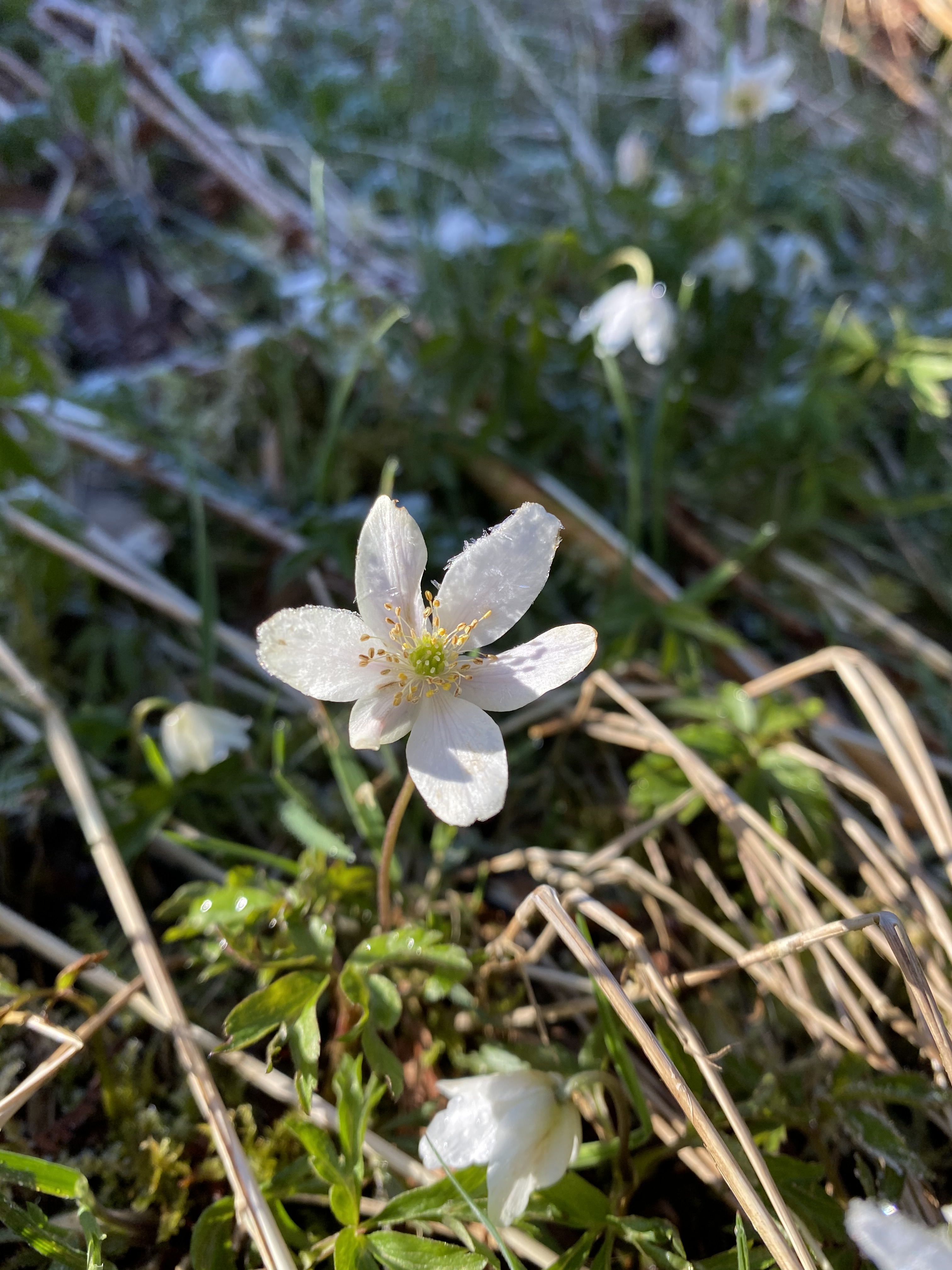
The last few weeks have seen a confusion of spring sunshine and night-time frost, potentially delaying the appearance of some tree buds. Underneath the still bare branches though, you may find forests of stars, as wood anemones take advantage of the clear line of sight to the sky.

A friend thought they were called ‘wooden enemies’ as a child. The misnomer is the opposite of their true origins. A perennial herb of the buttercup family, they thrive in woodland, preferring the dappled shade that tree cover gives. That said, there are none to be found in the wood behind our house. Where they can be seen however, is in amongst the winter grass on a slope in next door’s garden.

In the recent cold mornings, the flower heads have been bent low on their thin stalks, petals held close against the frost. The green lobes of their leaves fan out below them, coated in a fine filigree of ice crystals that melt at a hint of heat in the air. By mid-morning, the small flowers have opened their white faces to the warmth of the sun. Each petal is diaphanous as a butterfly wing, bright veined in sunlight, revealing a starburst of gold anthers at their centre.

Also known as the windflower, ironically they have no need of the wind to proliferate. Like bracken, their growth is underground. Their rhizomes – stems that side-shoot below the earth – grow at a rate of six feet every hundred years. According to the conservation charity Plantlife, this slow growth makes their presence a good indicator of ancient woodland. This small garden patch is only a few feet across, growing in the shade of a pampas grass and some self-seeding fir trees, but it might have grown from some scrap of stem, left in soil that once held the roots of much older trees.

The wind of the flower’s name comes from Greek mythology: the wind god Anemos sent anemones as heralds of his coming in the spring. Their spring appearance, however, is another nod to their woodland origins. They have evolved to catch the direct sunlight that makes it to the understory before the leaf-canopy becomes too dense.

The reason for their success here though, and not on the wood-covered bank further up the hill, probably lies in the fence that protects the garden from browsing animals. One study showed wood anemone to be vulnerable to roe deer grazing. These diminutive deer are another species which can thrive in deciduous woodland, and their bark can often be heard on the wind. In a month or so, when the leaves are out, there’s a chance we’ll see new twin fawns light-footing through the trees. So, for now at least, this cluster of wood anemone will stay in the garden.

First published in Lochaber Times, April 17, 2021.