Standing at the top of the croft and looking down the slope I can hear Lawrie calling to one of our sons. The sun shines hard and white at my back, a welcome change from the dreich grey days of winter. Even at this distance, glimpsed as he is through the birch trees, I can see his face screwed up as he looks for the boy. He is the size of a lego man from where I stand up the hill, yet when I call “Is he there?” with no great force in my voice I hear him answer “Aye”, as if I had been standing just a few metres away.
I am up the hill with a black bin bag and thick gloves, collecting rubbish dropped by the ravens. He is by the house putting up a fence to stop the sheep from destroying the garden. Neither of these activities particularly smack of crofting conventions, but as we call to each other across the ground I am struck that when this croft was created human voices would have carried across the earth, through the air, just the same. I am standing in the winter remains of long grass that in years gone by would likely have had livestock on it, so our voices would have been joined by the animals’ sonorous lowing. As it is, the bass notes now come from the rumble of forestry and landfill lorries on the single-track road by the shore below.
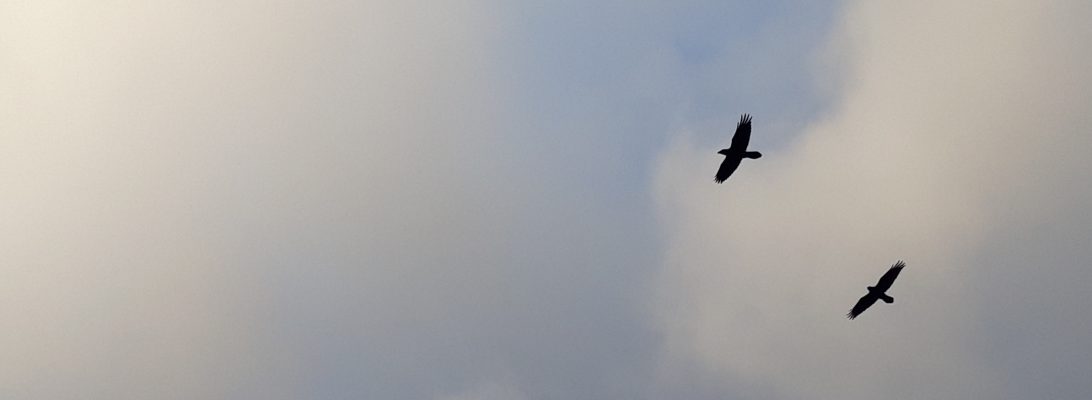
Earlier in the day I had been at the same task in the trees at the back of the croft next door and my phone had started ringing in my back pocket. It had been Lawrie checking that our 5 year old son, who had wandered off in my direction, had indeed found me. If he’d called with his voice alone then I doubt I would have heard him, so what would he have done before we had mobile phones? Downed tools and come to check himself I suppose, or at least come within hearing-shot. As I go further up the croft with my bag now, heading towards an oak beneath which is a midden of pecked-clean mammal bones and plastic food containers, I can still hear the reassuring sounds of the boys shouting at their game. I can hear the metallic thud of the fence-post driver as Lawrie hammers the posts into the ground. Two ravens fly in a straight line above my head; I’m alerted to them only by the soft whupping of their wings in the air. “Aye, it’s your mess I’m cleaning up”, I call up to them. Whether they hear me or not, there is no acknowledgement and they are soon gone.
 Kirsteen Bell