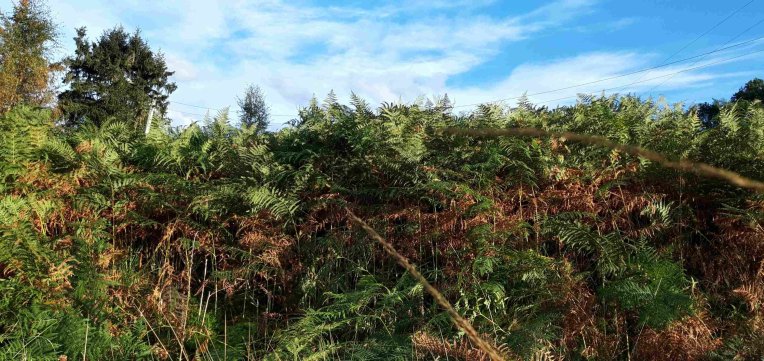
The bracken is dying. The green hills are slowly singeing; yellow, copper, and bronze blending with some still-verdant patches, smirred into an impressionist’s pallet in Loch Linnhe below. A puffer disrupts the vision as it steams down the water, purple-black smoke streaming behind it, a novelty from a fading generation.
Though once used for bedding or mulch, bracken fern is now mainly viewed as invasive, reducing both biodiversity and the grazing territory available to farmers and crofters. To be rid of bracken you must repeatedly knock it back, two, three times in a season. Then you must repeat the process the following year. Year, upon year, upon year. If you do not, if you give the new growth an inch of space and time, it will take it and grow.
Bracken is old and bracken is persistent. Fossil records date it to at least 55 million years ago. It can quickly regenerate from the smallest of roots, rhizomes waiting patiently underground for new shoots to be allowed to unfurl, fiddleheads rising again to play with the wind, to reach above our heads so that in spring the hills ripple with soft green waves.
I cross a stile by the Polldudh track in Glen Nevis, following a path of mud-sunk footprints and flattened grass. Underneath a tall rowan, red berries still clinging to its branches, there is a hint of a gap in the bracken. Someone has already stamped through here – stalks lie snapped at right angles close to the ground. Beyond these, the greener stems slope away from me, their lush heads pulled down by the weakening below, their lower fronds now brown, cracked curls trailing the late September sunshine to its faint ends.
I put my hand out to one withered stalk, running my fingers along its dried pinnae; I thought they would crumble, disintegrate into my palm, but they are surprisingly strong. One curls around my thumb and holds tight as I pull, like a baby’s reflex, tiny fingers gripping mine.
 Kirsteen Bell