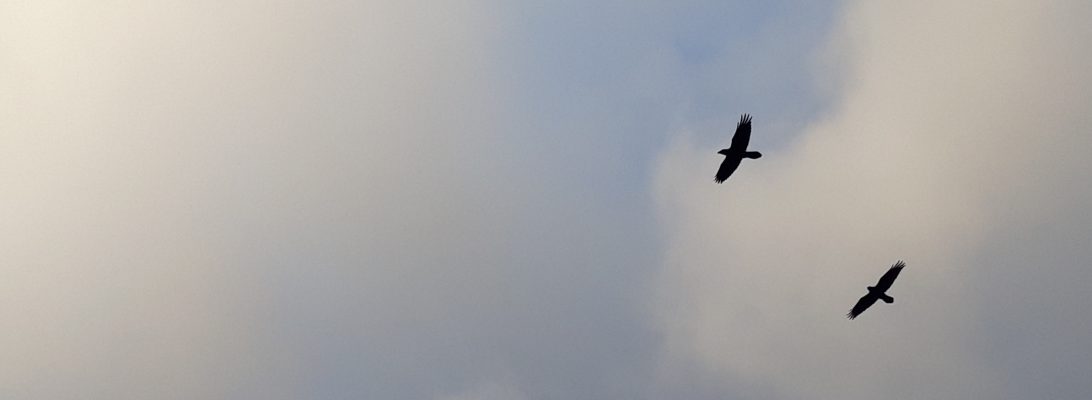
Summer and Autumn Go Head to Head

The hills are an odd mix of bronze and purple, as autumn and summer go head to head in a confusion of delicate decay and plush growth. Heather sweeps in a flush up the slopes, while around it the bracken has already started collapsing, stalks withered and weak.

From January to August last year we had seen a fairly scant 460 total hours of sunlight: this year, at the time of writing, there have been more than 650 sunlit hours since the turn of the year. These August skies have brought almost double the light to Lochaber than the same month last year. Combined with our resident rainfall, the result is a disconcerting hot green summer with more than just a whiff of autumn about it.

Weeks ago, a friend told me she and her son had come across ripe brambles, half a season ahead of their normal fruiting time. I was catching glimpses of rowan berries in July, bright beacons of summer’s end while we were still in the midst of it. Oak trees heading towards a mast year are heavy too with acorns. Or they were, until Storm Floris had its battering go at everything. 

When trees drop their leaves in autumn it is, in part, a defense mechanism against winter winds. Leaves may be small, but in the millions they catch the gusts in volumes enough to wrench even the strongest of branches, tipping trees across roads busy with tourists. One visitor stood in the high street watching the roof peel off a building and asked ‘Is this normal weather for the Highlands then?’. Well, no. And yes.

The adage of ‘four seasons in one day’ feels a little too close to the bone nowadays. The edges of the seasons are shifting, their boundaries blurring.  Where spring took forever to come last year, limping in after a long and dark winter, this year it burst from the landscape. The big oak in front of our house, usually one of the last to leaf, was in its full finery before May was out.  Now, it is peppered with brown curls, and the air around it is too quiet.

Standing at the kitchen window, my son asks what are the flock of small birds he’s just watched fly across the tree tops. Once I would have answered confidently that they might have been swallows or house martins gathering for their migration back south, but I realise now that I haven’t seen any in days.  Instead, a tiny voice in the back of my mind wonders if they might have been fieldfare arrived from the north, months ahead of schedule. Highly unlikely, says the voice of reason, as another dead leaf floats by the window, coppery in the evening sun.
Storing light

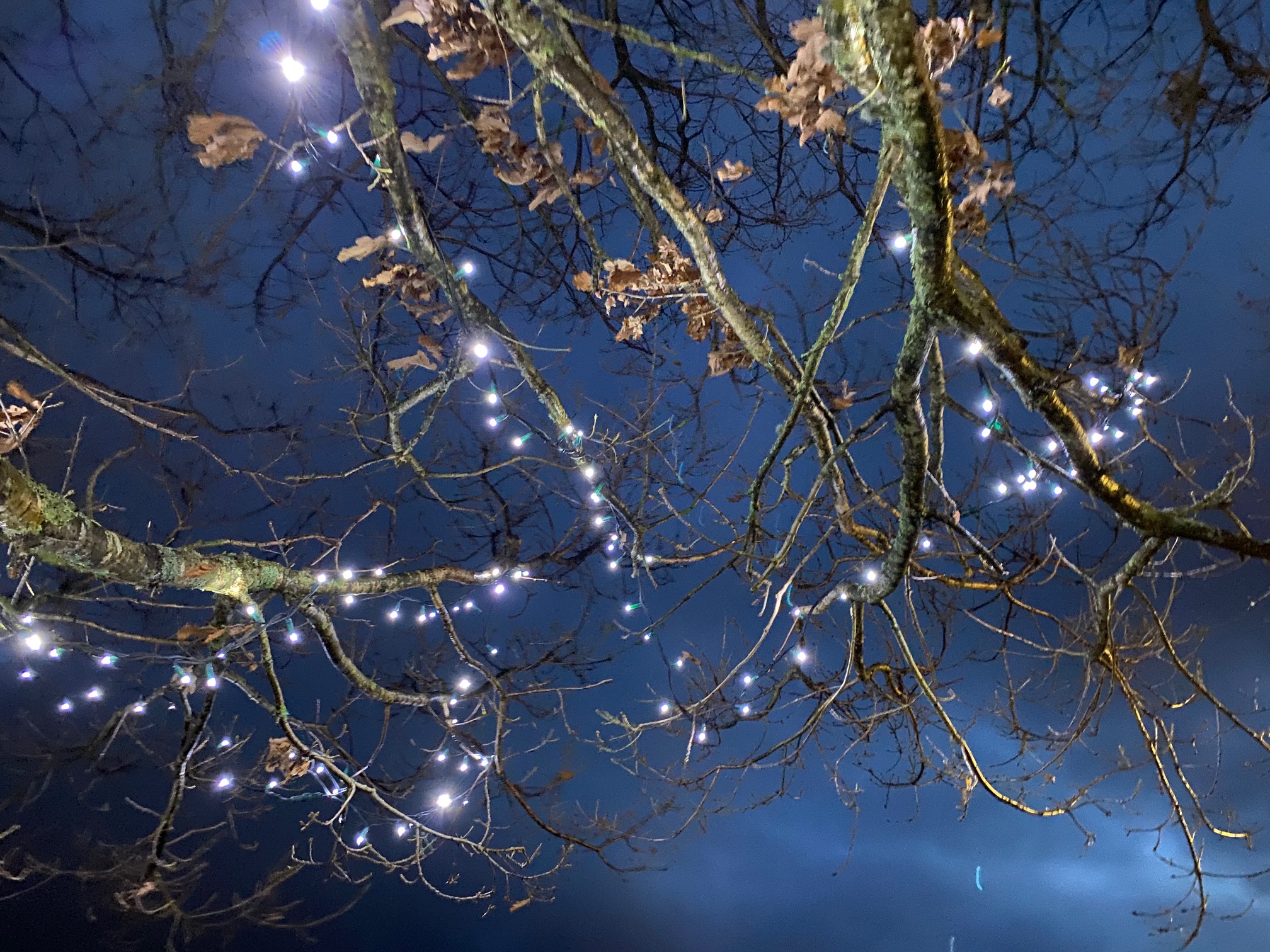
It would be easy to miss the winter solstice, living as we do in a world of artificial light. Walking at night across the field by our house, the eye is drawn away from the black hill, towards the warmth of home. Light spills out of our north-facing windows, falling onto the oak tree like snow. I can go inside, close the curtains, and pay no heed to the rising and setting of the sun.  

On the 21st of December, the northern half of planet Earth was on a tilt away from our central star. While the Southern hemisphere was enjoying its longest day, we were as far from the sun as we would get in the course of the year, pointing out into cold space. But how we must twinkle in that darkness.  

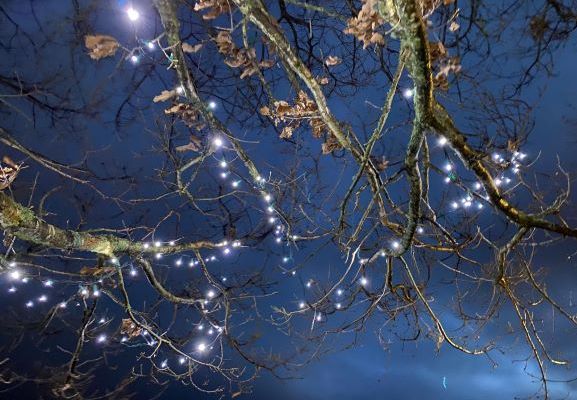
When I was wee, we would look out for the Christmas trees as they popped up one by one, fairy lights brightening the otherwise dark houses. My children now do the same. We live in a world where it is easy to harness the energy previously captured from the sun. Whether that energy comes from solar panels, or by burning oil, coal, or wood, or even from wind power, all depend on the sun at some point in their existence – and so do we.  And so we take that stored sunlight and release it back into our lives.

There was a time when our dependence on the sun shaped the course of our days more directly than it does now. Our genetic ancestors may once have cooried in for the long haul like hedgehogs or bears. Analysis of early human bones, found fossilised in a cave in Northern Spain, has suggested that our hominin predecessors may have hibernated through the darkest seasons. However, the study goes on to say that the damage and disease evident in the bones indicates that, if we did hibernate, it was poorly tolerated. We would tolerate it even less well now without the coping mechanisms we have drawn from brighter days.  

Humans have a long history of gathering light around us when we are furthest from it. The Gaelic words for winter solstice are grian-stad a’ gheamhraidh – literally sun-stop winter. We mark this moment in both words and actions. The traditions surrounding the festivities have changed over the years, depending on human culture: from Maes Howe, the Neolithic chamber in Orkney, built to let a brief burst of sunlight into the tomb on the solstice, to the lighting of candles in houses on Oidhche Choinnle, through to the Christian absorption of Celtic solstice ceremonies, and the arrival of Christmas.  

I love the fairy lights that come with Christmas. I would have them up all year if I could get away with it – but it is only really at this time of year that they come into their own. On the longest night of the year, we light up our world. 

Originally published by Lochaber Times Issue No 8545 Thursday 7 January

Addendum: This was written at the end of 2020. It is now the end of the first month in a new year. My fairy lights are still up, brightening my days.