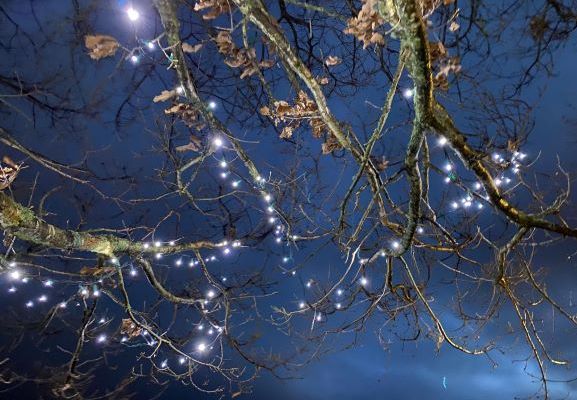
It would be easy to miss the winter solstice, living as we do in a world of artificial light. Walking at night across the field by our house, the eye is drawn away from the black hill, towards the warmth of home. Light spills out of our north-facing windows, falling onto the oak tree like snow. I can go inside, close the curtains, and pay no heed to the rising and setting of the sun.
On the 21st of December, the northern half of planet Earth was on a tilt away from our central star. While the Southern hemisphere was enjoying its longest day, we were as far from the sun as we would get in the course of the year, pointing out into cold space. But how we must twinkle in that darkness.
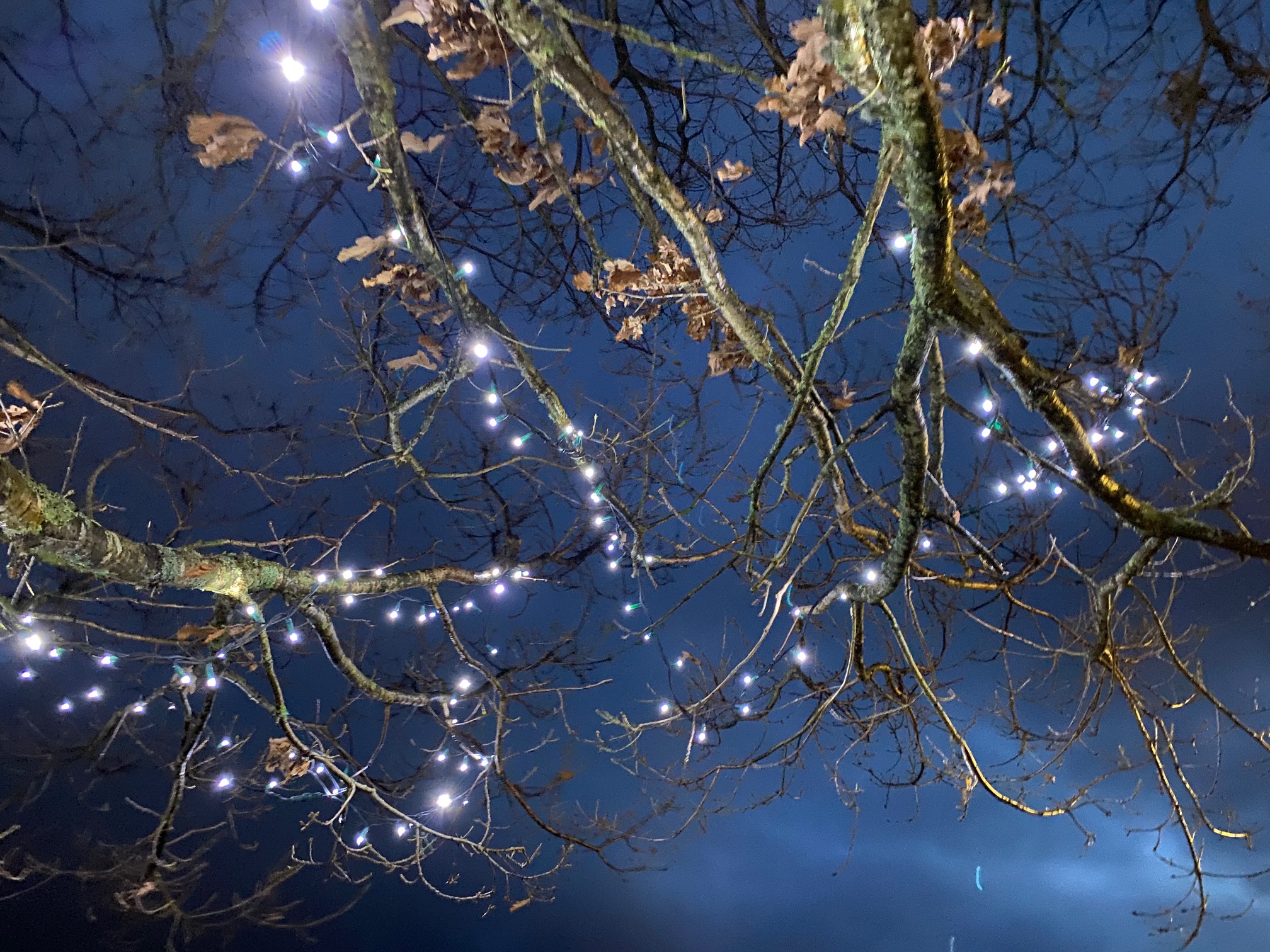
When I was wee, we would look out for the Christmas trees as they popped up one by one, fairy lights brightening the otherwise dark houses. My children now do the same. We live in a world where it is easy to harness the energy previously captured from the sun. Whether that energy comes from solar panels, or by burning oil, coal, or wood, or even from wind power, all depend on the sun at some point in their existence – and so do we. And so we take that stored sunlight and release it back into our lives.
There was a time when our dependence on the sun shaped the course of our days more directly than it does now. Our genetic ancestors may once have cooried in for the long haul like hedgehogs or bears. Analysis of early human bones, found fossilised in a cave in Northern Spain, has suggested that our hominin predecessors may have hibernated through the darkest seasons. However, the study goes on to say that the damage and disease evident in the bones indicates that, if we did hibernate, it was poorly tolerated. We would tolerate it even less well now without the coping mechanisms we have drawn from brighter days.
Humans have a long history of gathering light around us when we are furthest from it. The Gaelic words for winter solstice are grian-stad a’ gheamhraidh – literally sun-stop winter. We mark this moment in both words and actions. The traditions surrounding the festivities have changed over the years, depending on human culture: from Maes Howe, the Neolithic chamber in Orkney, built to let a brief burst of sunlight into the tomb on the solstice, to the lighting of candles in houses on Oidhche Choinnle, through to the Christian absorption of Celtic solstice ceremonies, and the arrival of Christmas.
I love the fairy lights that come with Christmas. I would have them up all year if I could get away with it – but it is only really at this time of year that they come into their own. On the longest night of the year, we light up our world.
Originally published by Lochaber Times Issue No 8545 Thursday 7 January
Addendum: This was written at the end of 2020. It is now the end of the first month in a new year. My fairy lights are still up, brightening my days.
 Kirsteen Bell